In today’s competitive business environment, having an online presence is essential for attracting customers and building a successful brand. People use Google, social media platforms, websites, and online reviews to discover businesses and make purchasing decisions.
However, simply creating a website or opening a social media account is not enough. Businesses need effective digital marketing strategies to reach the right audience, generate quality leads, and increase sales.
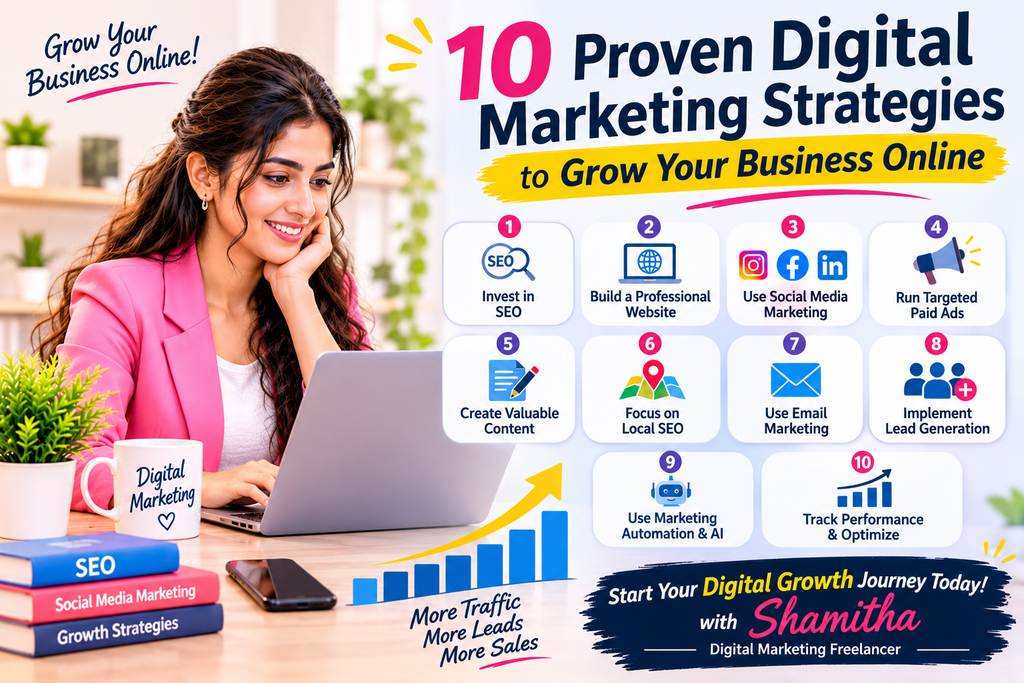
Whether you own a small business, startup, or established company, the right digital marketing approach can help you achieve sustainable growth. Here are 10 proven digital marketing strategies to grow your business online.
1. Invest in Search Engine Optimization (SEO)
Search Engine Optimization (SEO) helps improve your website’s visibility on search engines like Google.
When customers search for products or services related to your business, SEO helps your website appear in relevant search results.
Important SEO activities include:
- Keyword research and optimization.
- Creating high-quality website content.
- Improving website speed and mobile usability.
- Building relevant backlinks.
- Optimizing website titles and descriptions.
A strong SEO strategy can attract organic traffic and help potential customers discover your business.
2. Build a Professional Business Website
Your website is often the first impression customers have of your business. A professional, user-friendly website helps establish credibility and communicate your services effectively.
Make sure your website includes clear navigation, attractive design, mobile responsiveness, fast loading speed, and simple contact options.
Include dedicated service pages, customer testimonials, and strong calls to action to encourage visitors to enquire or make a purchase.
A well-designed website works as your digital storefront and supports your marketing efforts.
3. Use Social Media Marketing
Social media platforms such as Instagram, Facebook, LinkedIn, and YouTube help businesses connect with their target audiences.
Businesses can use these platforms to share educational posts, product demonstrations, customer stories, promotional offers, and engaging videos.
Consistency is important. Create a content calendar and publish content that provides value instead of focusing only on promotions.
Social media marketing helps increase brand awareness, encourage engagement, and build long-term customer relationships.
4. Run Targeted Paid Advertising Campaigns
Paid advertising allows businesses to reach specific audiences based on interests, location, demographics, and online behaviour.
Platforms such as Google Ads and Meta Ads offer different campaign options to promote products and services.
For example, a local clothing store can run Instagram advertisements targeting people interested in fashion within its service area.
Start with a realistic budget, test different advertisements, monitor campaign performance, and optimize based on results.
5. Create Valuable Content Marketing
Content marketing involves creating and sharing useful information to attract and educate potential customers.
Businesses can publish blog articles, videos, infographics, guides, and social media posts that answer common customer questions.
For example, a skincare business can publish articles about skincare routines, product ingredients, and common skin concerns.
Valuable content helps build credibility, supports SEO, and gives customers reasons to engage with your brand.
6. Focus on Local SEO
Local SEO helps businesses attract customers searching for products and services in specific geographical locations.
A properly optimized Google Business Profile can improve your chances of appearing in local search results and Google Maps.
To strengthen your local SEO:
- Add accurate business information.
- Select relevant business categories.
- Upload quality business photographs.
- Collect genuine customer reviews.
- Keep contact details and opening hours updated.
Local SEO is especially useful for restaurants, salons, clinics, retail stores, and service providers.
7. Use Email Marketing to Build Relationships
Email marketing is an effective way to communicate with existing customers and interested prospects.
Businesses can send newsletters, product updates, special offers, event announcements, and personalized recommendations.
For better results, divide your audience into relevant groups and send useful messages based on their interests.
Avoid sending too many promotional emails. Focus on providing valuable information that encourages customers to stay connected with your brand.
8. Implement Lead Generation Strategies
Generating leads is essential for businesses that want to increase enquiries and sales.
Lead generation strategies help attract potential customers and collect their contact information through websites, landing pages, advertisements, and enquiry forms.
For example, a digital marketing agency can offer a free website audit in exchange for an interested visitor’s contact details.
Follow up with leads through email, phone calls, or WhatsApp to build relationships and convert genuine prospects into customers.
9. Use Marketing Automation and AI Tools
Artificial Intelligence and automation tools are making digital marketing more efficient.
Businesses can use these tools for content planning, customer communication, email automation, campaign analysis, and repetitive marketing tasks.
For example, automated email sequences can welcome new subscribers and share relevant information without requiring manual follow-ups every time.
However, AI should support human creativity and strategic thinking rather than replace them completely.
10. Track Performance and Optimize Your Strategy
Successful digital marketing requires regular monitoring and improvement.
Tools such as Google Analytics, Google Search Console, and advertising platform dashboards provide useful information about campaign performance.
Monitor important metrics such as:
- Website traffic.
- Search engine rankings.
- Social media engagement.
- Cost per lead.
- Conversion rates.
- Return on advertising spend.
Use these insights to identify successful activities, improve weak campaigns, and make better marketing decisions.
Conclusion
Growing a business online requires more than simply posting on social media or creating a website. It requires a consistent strategy that combines SEO, content marketing, social media, paid advertising, lead generation, and performance tracking.
The 10 strategies discussed above can help businesses improve their online visibility, connect with potential customers, generate quality leads, and increase sales.
Start with the strategies that match your business goals and budget. Measure your progress, understand your audience, and continuously improve your marketing efforts.
Ready to grow your business online?
Shamitha offers freelance digital marketing services, including SEO, website designing, lead generation, social media marketing, and performance marketing. Get the right digital marketing support to strengthen your online presence and take your business to the next level.